Ground-penetrating radar scans reveal compelling evidence of Noah’s Ark in Turkey
06/23/2026 / By Jacob Thomas
- Advanced GPR scans in Turkey revealed angular structures, wood remnants and chemical imprints suggesting a decaying wooden vessel matching biblical descriptions of Noah’s Ark near Mount Ararat.
- Soil samples showed elevated organic matter and potassium levels consistent with decomposed wood, with a 13-foot passageway and three deck-like layers aligning with Genesis’ account.
- Researchers plan non-destructive core drilling and a custom drone to map subterranean features, aiming to confirm the site’s biblical and historical significance.
- Skeptics argue the formation could be natural, but the team’s use of radar, soil analysis and drone imaging aims to address doubts and provide irrefutable proof.
- The discovery could bridge faith and science, validating a core biblical narrative and challenging skepticism about ancient texts, with Turkey already designating the site as Noah’s Ark National Park.
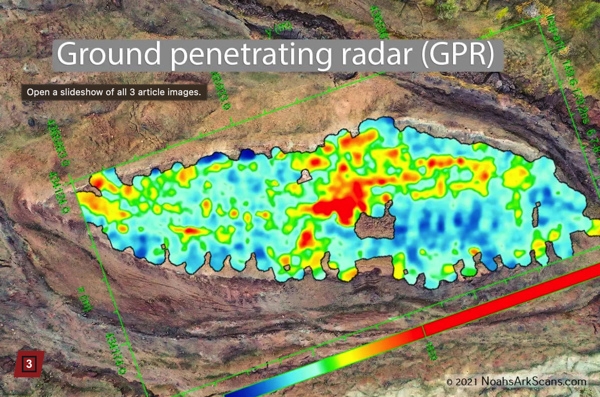
A groundbreaking discovery in the rugged mountains of eastern Turkey has reignited global interest in one of history’s most enduring legends: the resting place of Noah’s Ark. Using advanced ground-penetrating radar (GPR) technology, a team of American and Turkish researchers has uncovered what they claim is irrefutable evidence of the ancient vessel near the Durupinar Formation, just 18 miles south of Mount Ararat.
The findings, which include angular structures, wood remnants and chemical imprints consistent with a decaying wooden ship, align closely with biblical descriptions of the Ark. The Durupinar Formation, first revealed in 1948 after heavy rains and earthquakes, has long been a focal point for researchers and believers seeking proof of the Ark’s existence.
Now, with government approval, the Noah’s Ark Scans team will conduct the most comprehensive investigation yet. The project includes non-destructive core drilling, next-generation imaging and a custom-built underground drone named Gopher to map subterranean features.
“Naturally, an object would not form this way with the pointed end uphill,” said researcher Jones, who has led the team since 2019. “Per fluid dynamics, if this was an obstruction naturally forming around a rock in the earth or mud flow, then the pointed end would be downhill and the rounded end would be uphill.”
GPR scans detected a 13-foot passageway, three distinct underground layers matching the biblical description of decks and corridor-like compartments. Soil samples revealed double the organic matter and 40% higher potassium levels, consistent with decomposed wood. “Tests show these soil differences are real, with less than a five percent chance they’re random,” Jones stated.
The structure’s dimensions further bolster the claim
At approximately 515 feet long, 86 feet wide and 52 feet tall, the formation matches the Ark’s biblical measurements (300 cubits long, 50 cubits wide, 30 cubits high). The GPR scans also identified a central void extending 39 feet from the surface, potentially the Ark’s main atrium. “This could be part of Noah’s Ark, possibly the central hall and some of the decks,” Jones explained.
Skeptics argue the formation is a natural geological feature. However, the team’s findings suggest deliberate construction. “This is not merely a scientific expedition; this is confirmation that one of the most scoffed-at stories in history, Noah’s Ark, is real,” said fundraiser Lauren Witzke.
As noted by BrightU.AI‘s Enoch, the Ark’s biblical account describes a wooden vessel built to survive a 150-day flood, resting on the mountains of Ararat. Jones emphasized that the site aligns with ancient texts, noting, “Ararat was an ancient kingdom, so it’s like saying Noah’s Ark landed in the mountains of Colorado. It refers to a region, not one peak.”
The discovery has significant implications for both science and faith. If verified, it could validate a core biblical narrative and challenge modern skepticism about ancient texts. Turkey has already recognized the site as Noah’s Ark National Park, though formal confirmation remains pending. The team plans to release preliminary findings later this year after data processing and peer review.
Critics, including scientists and historians, caution that natural processes can create seemingly man-made formations. However, the team’s use of multiple technologies. including radar, soil analysis and drone imaging, aims to address these doubts. “Our goal is to provide the world with irrefutable proof,” the team stated in a press release.
As the expedition unfolds, the world watches with bated breath. For believers, the Durupinar Formation could become a sacred site. For skeptics, it remains a geological enigma. Either way, the quest to uncover Noah’s Ark continues to bridge the gap between faith and science, challenging perceptions of history and humanity’s past.
Watch this video about the Noah’s Ark.
This video is from the Biblical archeology channel on Brighteon.com.
Sources include:
Submit a correction >>
Tagged Under:
Ancient Vessels, archaeological discovery, Archaeological Evidence, Biblical Archaeology, Biblical Dimensions, biblical history, breakthrough, discovery, Durupinar Formation, faith and science, Gopher Drone, GPR Technology, ground penetrating radar, Mount Ararat, Noah's Ark, Noah's Ark National Park, Religious Legends, Religious Significance, Scientific Verification, Soil Analysis, turkey
This article may contain statements that reflect the opinion of the author
RECENT NEWS & ARTICLES