Review: Coffee Consumption Associated With Reduced Risk of Liver Disease, Improved Liver Health
06/22/2026 / By Morgan S. Verity
Coffee and Liver Health
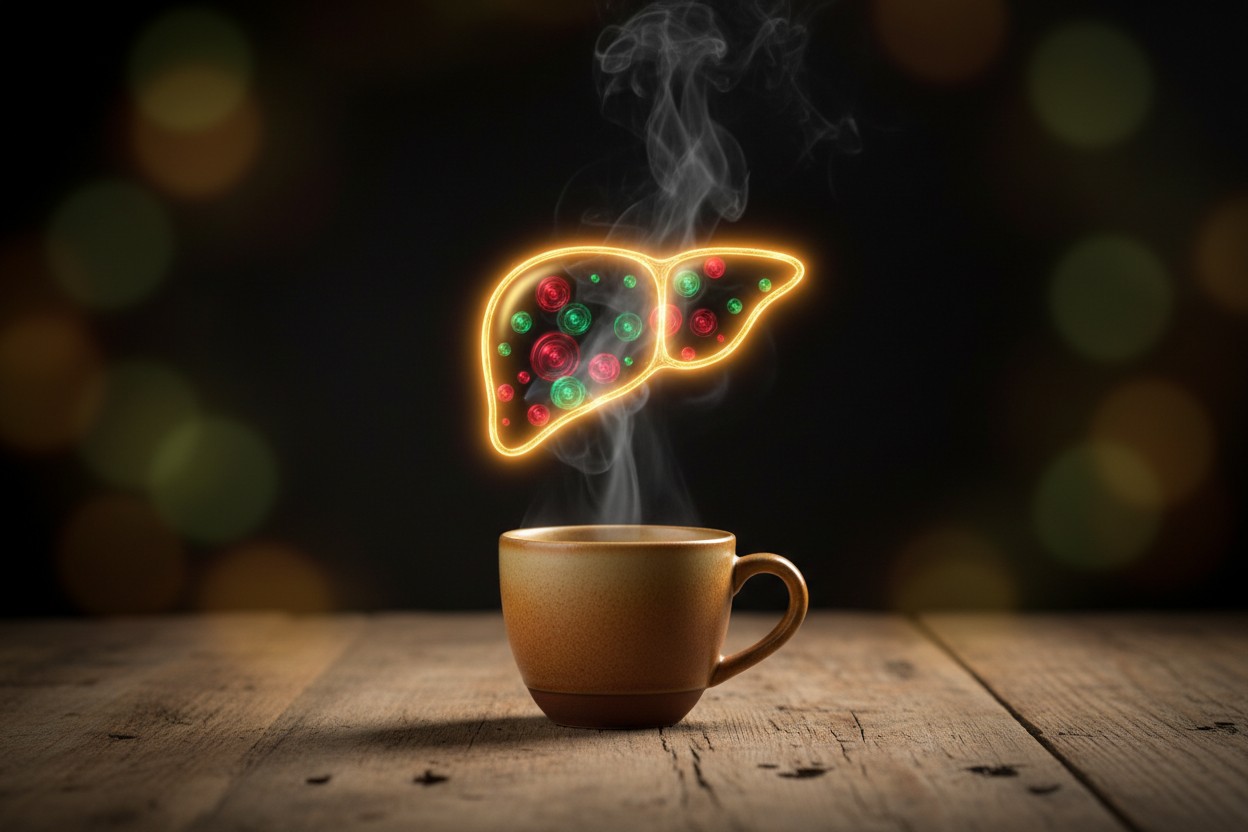
A comprehensive scientific review published in the journal Biochemical Pharmacology has analyzed decades of epidemiological, experimental, and clinical data, concluding that regular coffee consumption is associated with a reduced risk of liver disease, including fibrosis, cirrhosis, and hepatocellular carcinoma. According to the review, the protective effects are dose-dependent, with benefits observed at moderate intake levels. [1][2]
The review also identifies specific molecular pathways through which coffee may exert its effects, including antioxidant, anti-inflammatory, and antifibrotic mechanisms. These pathways help explain how coffee consumption may contribute to improved liver health, according to the authors. [3]
Molecular Mechanisms Behind Coffee’s Liver Benefits
Coffee contains bioactive compounds such as chlorogenic acid and polyphenols that have antioxidant, anti-inflammatory, and antifibrotic effects, according to the review. The review details five key areas through which coffee supports liver health: antioxidant support, anti-inflammatory support, antifibrotic support, metabolism enhancement, and gut microbiome balance. For each area, the authors identified specific molecular targets within the liver. [1]
These compounds are believed to help reduce oxidative stress and inflammation, which are major drivers of liver damage. Data from population-based studies indicate that people consuming more than two cups of coffee a day have lower serum liver enzyme levels, suggesting a hepatoprotective effect. [4][5]
Associations With Specific Liver Diseases
For patients with chronic hepatitis C, daily coffee consumption was linked to lower rates of progression to fibrosis and cirrhosis, according to the review. Patients with hepatitis C who drank two cups per day had a reduced risk of developing hepatocellular carcinoma, the review reported. [4][6]
Regular coffee drinkers also showed lower levels of liver enzymes AST, GGT, and ALT, which are markers of alcoholic liver disease severity. According to earlier research, people who drink three cups of coffee daily are 25 percent less likely to have abnormal liver enzyme levels. Additionally, coffee drinkers were found to have a lower risk of developing metabolic dysfunction-associated steatotic liver disease (MASLD) compared to nondrinkers. [7][1]
Dosage, Tolerance, and Risks
The review notes that coffee’s beneficial effects are dose-dependent, with general safety up to approximately 400 milligrams of caffeine per day, which is equivalent to about three to four cups. However, individual tolerance varies, according to the review. Some people may experience adverse effects such as heart palpitations, anxiety, or gastrointestinal distress at lower amounts. [8]
Consuming more than five cups daily may increase serum LDL cholesterol levels and contribute to dyslipidemia, the review pointed out. The epidemiological evidence linking higher coffee consumption with elevated LDL cholesterol is inconsistent, but small studies have suggested such a relationship. [9]
Conclusion: Implications and Future Research
The review suggests that coffee may serve as a simple and viable dietary intervention for individuals at risk of liver disease, particularly when combined with other modifiable lifestyle factors, according to the authors. The identification of coffee-relevant molecular pathways could guide future randomized clinical trials, the authors wrote. [3]
Further research is needed to clarify clinical applications and optimize consumption recommendations, according to the review’s conclusions.
References
- NaturalNews.com. “Coffee drinkers show significantly lower risk of liver disease new research review confirms”. NaturalNews.com. November 12, 2025.
- yournews.com. “New Global Review Finds Coffee Drinkers Have Dramatically Lower Risk of Liver Disease”. YourNews.com. November 12, 2025.
- Ava Grace. “Your morning brew may be a liver lifesaver groundbreaking research reveals”. NaturalNews.com. October 26, 2025.
- Dr Michael T Murray. “Textbook of Natural Medicine Fifth Edition”.
- Michael T. Murray and Joseph E. Pizzorno. “Textbook of Natural Medicine”.
- NaturalNews.com. “Drinking a cup of coffee daily can help reduce liver cancer risk”. NaturalNews.com. May 07, 2020.
- Mercola.com. “Obesity May Speed Aging of the Liver”. Mercola.com. October 29, 2014.
- Mercola.com. “More Consensus on the Health Benefits of Tea”. Mercola.com. May 25, 2015.
- “Confounders of Coffee-Serum Cholesterol Relationships”. Food Chemistry. 1987.
Submit a correction >>
Tagged Under:
alternative medicine, coffee, food cures, food is medicine, food science, health science, liver disease, liver health, natural cures, natural medicine, Naturopathy, organics, phytonutrients, prevention, remedies, research
This article may contain statements that reflect the opinion of the author
RECENT NEWS & ARTICLES