High-voltage sodium home battery emerges as affordable rooftop solar solution
08/20/2026 / By Willow Tohi
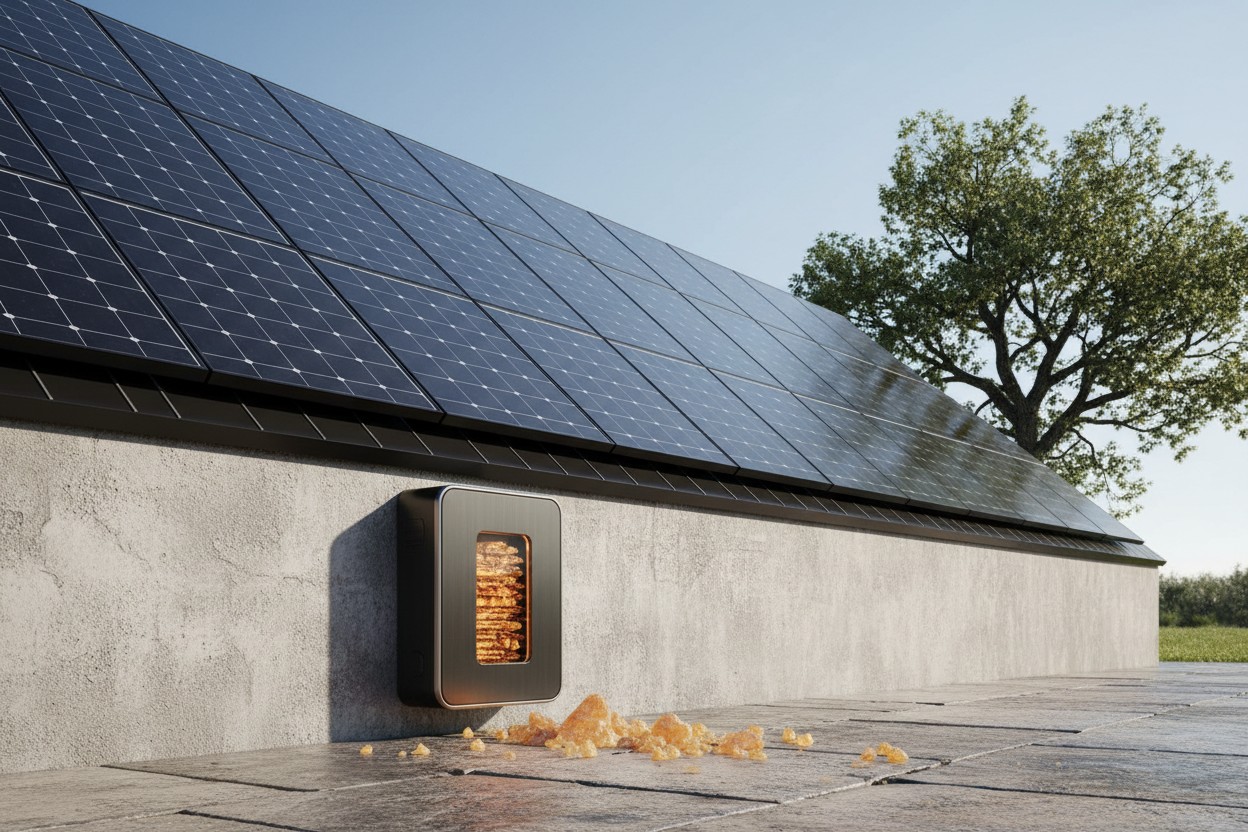
- German startup Revolta AG unveiled a high-voltage sodium home battery at Intersolar Europe 2026, offering a 2.2 kWh modular starting unit that scales up to 22 kWh.
- The technology uses a proprietary transformer to boost voltage by roughly 50 times, requiring only three sodium-ion cells per module.
- Sodium-ion batteries eliminate reliance on rare minerals like cobalt, using abundant sodium and aluminum components to reduce costs and supply chain risks.
- The system aims to help homeowners shift rooftop solar energy to evening hours, lower utility bills, and provide resilient backup power during outages.
- Industry experts say the technology could ease grid strain and accelerate residential adoption of solar-plus-storage systems.
A new era for home energy storage
German startup Revolta AG introduced a first-of-its-kind high-voltage sodium home battery at Intersolar Europe 2026, presenting a more affordable and safer alternative to conventional lithium-ion storage systems for rooftop solar owners. The announcement, reported by The Tech Edvocate, marks a significant step toward making residential energy independence more accessible. The system’s proprietary transformer boosts voltage output by roughly 50 times, enabling a compact 2.2-kilowatt-hour module that operates with only three sodium-ion cells and can scale to 22 kWh. This development addresses the long-standing challenge of storing solar power for nighttime use while offering households a cost-effective solution that reduces dependence on the grid during peak hours.
Sodium’s strategic advantage over lithium
The battery’s chemistry represents a fundamental shift from the lithium-ion paradigm that has dominated the residential storage market. Unlike lithium-ion batteries, sodium-ion technology does not rely on cobalt or other rare minerals, utilizing instead one of the most abundant elements on Earth. This availability translates directly into cost advantages, with sodium sourced from common materials like salt rather than geographically concentrated lithium deposits. The elimination of cobalt, often associated with environmental degradation and geopolitical supply concerns, creates a more sustainable and resilient supply chain. Internal components, including cathodes, can also be manufactured from aluminum rather than costly alloys, further reducing expenses.
Energy analysts note that lithium-ion raw materials cost approximately $10,000 to $11,000 per ton, whereas sodium equivalents run between $600 and $650 per ton. This price disparity suggests potential long-term savings for homeowners as the technology scales. Sodium-ion batteries also demonstrate a safety advantage over lithium systems, with better thermal stability and reduced risk of the catastrophic fires that have plagued some lithium installations.
Addressing solar’s timing problem
The system directly addresses the mismatch between peak solar production and typical household consumption patterns. Rooftop panels generate maximum output during midday hours, but families often consume more electricity in the evening when cooking, running cooling systems and charging devices. Without storage, that excess daytime energy flows back to the grid. The Revolta system enables households to capture that power and deploy it when utility rates rise during evening peak periods, potentially reducing monthly bills for customers on time-of-use pricing structures.
The modular design accommodates different household needs. Smaller homes can begin with one 2.2 kWh unit sufficient for lighting, internet, refrigeration and device charging. Larger residences can expand to the full 22 kWh capacity, supporting more appliances during expensive evening hours. This flexibility allows homeowners to match battery size to their budget and energy priorities, adding capacity as their needs evolve. A 22 kWh maximum system provides significant backup potential for extended outages, maintaining key systems such as refrigeration, communications and medical devices during severe weather events.
Broader implications for the grid
Beyond individual households, the technology carries implications for the broader energy network. Installers may find the system’s smaller footprint and flexible platform easier to integrate with existing solar setups, potentially accelerating residential adoption. When numerous households store electricity and consume it during high-demand periods, pressure on the grid eases, supporting a more balanced energy network. This distributed approach to storage is particularly relevant as renewable energy sources grow and utilities contend with fluctuating supply and demand.
Dr. Elena Petrova, a materials scientist at the Institute for Sustainable Energy, emphasized that the evolution toward safer residential storage options benefits grid operators. The chemistry also performs better in extreme temperatures than lithium equivalents, maintaining functionality in conditions where conventional batteries struggle.
A maturing market for alternative storage
Sodium-ion battery development has accelerated globally, with major manufacturers like CATL advancing the technology for electric vehicle applications while startups such as Revolta pursue the residential niche. Current sodium batteries deliver energy density between 100 and 200 Wh/kg compared with lithium’s 200 to 260 Wh/kg, a limitation that makes them better suited for stationary storage than high-performance vehicles. However, ongoing research into advanced cathode materials, including Prussian Blue analogs and polyanionic compounds, continues improving performance, with some experimental systems reaching 458 Wh/kg.
Practical path to energy independence
The Revolta battery demonstrates that affordable home storage need not depend on scarce or expensive materials. By leveraging sodium’s abundance and innovative voltage engineering, the system offers a practical path for homeowners to capture more value from rooftop solar investments. As supply chain diversity becomes increasingly important and demand for battery storage rises, sodium-based systems represent a maturation of the market—one that recognizes that the future of residential energy independence depends on choices that remain cost-effective for ordinary households. The technology signals that practical off-grid living, once considered an expensive aspiration, is moving closer to mainstream affordability.
Sources for this article include:
Submit a correction >>
Tagged Under:
breakthrough, electricity, energy supply, future science, future tech, green living, inventions, new energy, power, power grid, products, progress, renewables, Revolta battery, sodium battery, solar
This article may contain statements that reflect the opinion of the author
RECENT NEWS & ARTICLES